Japan's electricity market is experiencing a rapid increase in the use of corporate power purchase agreements (PPAs). First adopted by large Japanese corporates looking to green up their manufacturing operations, corporate PPAs are now being entered into by data centre operators to support the development of greenfield renewable projects. The 20-year agreement between Equinix and Trinasolar ISBU signed in April 2025 for 30MW of solar power from the Yufutsu Abira Project in Hokkaido exemplifies this significant market evolution.
For Japan's energy transition, these agreements are game-changers. In a post-Fukushima context where the country has struggled to balance energy security with decarbonisation goals, corporate PPAs provide a market-based mechanism to finance new renewable capacity outside traditional subsidy schemes. The data centre sector's entrance into this space is particularly noteworthy, as it addresses the dual challenges of powering Japan's digital economy while meeting increasingly stringent corporate environmental commitments.
Companies like Equinix are demonstrating that energy-intensive industries can play a constructive role in Japan's renewable expansion while securing long-term price stability—a compelling proposition in today's volatile energy markets.
This shift marks a pivotal moment in Japan's energy landscape. After completing its decade-long market unbundling process, we're witnessing the emergence of a more sophisticated energy procurement ecosystem where large consumers are directly supporting renewable development. Corporate PPAs represent the market coming full circle—from liberalisation aimed at increasing competition to a new form of vertical integration driven by sustainability rather than monopolistic control.
As Japan continues its journey toward carbon neutrality, we expect corporate PPAs to become an increasingly important tool in financing the country's renewable energy future.

Onsite PPAs: Simplicity and efficiency
Onsite PPAs have gained significant traction as they allow companies to procure renewable energy without the complexities of facility ownership. Under the Electricity Business Act, electricity exchange within a single demand site isn't considered ‘supply’, enabling generators to provide power directly to end users without a retailer license. This arrangement eliminates wheeling charges and renewable energy surcharges while reducing transmission losses.
There are no minimum capacity or offtake requirements for onsite PPAs. Their form is not regulated and they do not need to be registered.
Example – Solar carports
AEON Mall's landmark agreement with Sun Trinity LLC (a Sumitomo Corporation and Shikoku Electric Power joint venture), with plans to install 15MW of carport solar across 12 locations — among the largest deployments in a single location of its kind in Japan. Such arrangements allow companies to focus on their core operations while securing predictable energy costs and environmental attributes in a single transaction.
Physical Offsite PPAs: Two pathways
In Japan, physical offsite PPAs can be procured either directly from generators or through retailers.
When procuring through a retailer, electricity generators sell to retailers who then supply end users under back-to-back agreements for both electricity and environmental attributes. The end user pays a pre-agreed price.
- The legal structure is relatively simple in that the terms will follow those of a typical retail supply contract.
- The retailer may also be agreeable to ‘wrap’ generation shortfall by providing balance generation when the generation facility produces less than the contracted capacity, which eases potential concerns with load balancing (see below) and ensuring the balance energy is also ‘green’ (subject to the retailer being able to procure renewable energy through the wholesale electricity market or other means and the retailer agreeing to provide environmental attributes for the balance electricity sourced in case of generation shortfall).
Example – Powering headquarters
Kao Corporation's three-party agreement with power provider JENEX and electricity retail supplier Minna-denryoku demonstrates this approach, supplying approximately 30% of Kao's headquarters electricity consumption from renewable sources. This
The direct procurement of electricity from a generator relies on provisions in the Electricity Business Act allowing ‘self-wheeling’. This distinguishes between:
- normal self-wheeling, where a user uses the grid to transport electricity produced by assets that it owns, and
- ‘third party ownership’ self-wheeling where a user uses the grid to transport electricity to receive electricity generated by a person who is a third party but with whom they have a ‘close relationship’.
Notable regulatory changes in November 2021 expanded the definition of ‘close relationship’ beyond capital ties to include ad-hoc partnership agreements, effectively broadening access to this model and going beyond the initial intent of allowing companies located in areas of high land scarcity to buy their own generation assets but locating them elsewhere. However, if the ‘partnership’ model is used, then the direct PPA will only be allowed to the extent that it uses a private transmission line, which greatly limits the appeal of this model.
Example: Manufacturing sites
Sony Group in 2021 adopted a 15-year self-wheeling program to supply electricity from its 400 KW solar power facility in Aichi Prefecture to its Sony Global Manufacturing & Operations Koda Site in the same prefecture. This is part of the group’s ‘Road to Zero’ efforts.
Physical offsite PPA requirements
|
Requirement
|
Application to retailer-intermediated PPAs
|
Application to self-wheeling PPAs
|
|
Minimum generation and offtake
There are no direct statutory minimum generation capacity or offtake requirements. However, technical and contractual requirements of grid utilities can provide for indirect limits or requirements in this respect (for example, minimum voltage connection requirements). Starting from January 1, 2024, the acceptance of new applications for self-wheeling was temporarily suspended. This was a measure to avoid confusion on the ground until the revised guidelines for ‘Guidelines for Self-Wheeling’ were implemented. The revised ‘Guidelines for Self-Wheeling’ implemented on February 12, 2024, have tightened the requirements for self-transmission. One of these tightened requirements is related to the ownership of generation facilities. As explained in footnote 1, the revised ‘Guidelines for Self-Wheeling’ were implemented on February 12, 2024. This tightened requirements for self-wheeling. One of these tightened requirements is related to the end-user of electricity. in an original self-wheeling PPA, there is no ‘legal’ transfer of environmental attributes. Rather, since the generator is the same person as the user (or is closely related) it can consider having consumed its own green power (similarly to self-produced onsite renewable electricity). |
Yes Starting from January 1, 2024, the acceptance of new applications for self-wheeling was temporarily suspended. This was a measure to avoid confusion on the ground until the revised guidelines for ‘Guidelines for Self-Wheeling’ were implemented. The revised ‘Guidelines for Self-Wheeling’ implemented on February 12, 2024, have tightened the requirements for self-transmission. One of these tightened requirements is related to the ownership of generation facilities. As explained in footnote 1, the revised ‘Guidelines for Self-Wheeling’ were implemented on February 12, 2024. This tightened requirements for self-wheeling. One of these tightened requirements is related to the end-user of electricity. in an original self-wheeling PPA, there is no ‘legal’ transfer of environmental attributes. Rather, since the generator is the same person as the user (or is closely related) it can consider having consumed its own green power (similarly to self-produced onsite renewable electricity). |
Yes Starting from January 1, 2024, the acceptance of new applications for self-wheeling was temporarily suspended. This was a measure to avoid confusion on the ground until the revised guidelines for ‘Guidelines for Self-Wheeling’ were implemented. The revised ‘Guidelines for Self-Wheeling’ implemented on February 12, 2024, have tightened the requirements for self-transmission. One of these tightened requirements is related to the ownership of generation facilities. As explained in footnote 1, the revised ‘Guidelines for Self-Wheeling’ were implemented on February 12, 2024. This tightened requirements for self-wheeling. One of these tightened requirements is related to the end-user of electricity. in an original self-wheeling PPA, there is no ‘legal’ transfer of environmental attributes. Rather, since the generator is the same person as the user (or is closely related) it can consider having consumed its own green power (similarly to self-produced onsite renewable electricity). |
|
Self-installation
A generator who uses self-wheeling must maintain and operate the generation facilities that it has installed itself. This means a generator cannot engage in self-wheeling by being transferred or leased generation facilities installed by others and then maintaining and operating them as a transferee or lessee.[1] Starting from January 1, 2024, the acceptance of new applications for self-wheeling was temporarily suspended. This was a measure to avoid confusion on the ground until the revised guidelines for ‘Guidelines for Self-Wheeling’ were implemented. The revised ‘Guidelines for Self-Wheeling’ implemented on February 12, 2024, have tightened the requirements for self-transmission. One of these tightened requirements is related to the ownership of generation facilities. As explained in footnote 1, the revised ‘Guidelines for Self-Wheeling’ were implemented on February 12, 2024. This tightened requirements for self-wheeling. One of these tightened requirements is related to the end-user of electricity. in an original self-wheeling PPA, there is no ‘legal’ transfer of environmental attributes. Rather, since the generator is the same person as the user (or is closely related) it can consider having consumed its own green power (similarly to self-produced onsite renewable electricity). |
No Starting from January 1, 2024, the acceptance of new applications for self-wheeling was temporarily suspended. This was a measure to avoid confusion on the ground until the revised guidelines for ‘Guidelines for Self-Wheeling’ were implemented. The revised ‘Guidelines for Self-Wheeling’ implemented on February 12, 2024, have tightened the requirements for self-transmission. One of these tightened requirements is related to the ownership of generation facilities. As explained in footnote 1, the revised ‘Guidelines for Self-Wheeling’ were implemented on February 12, 2024. This tightened requirements for self-wheeling. One of these tightened requirements is related to the end-user of electricity. in an original self-wheeling PPA, there is no ‘legal’ transfer of environmental attributes. Rather, since the generator is the same person as the user (or is closely related) it can consider having consumed its own green power (similarly to self-produced onsite renewable electricity). |
Yes Starting from January 1, 2024, the acceptance of new applications for self-wheeling was temporarily suspended. This was a measure to avoid confusion on the ground until the revised guidelines for ‘Guidelines for Self-Wheeling’ were implemented. The revised ‘Guidelines for Self-Wheeling’ implemented on February 12, 2024, have tightened the requirements for self-transmission. One of these tightened requirements is related to the ownership of generation facilities. As explained in footnote 1, the revised ‘Guidelines for Self-Wheeling’ were implemented on February 12, 2024. This tightened requirements for self-wheeling. One of these tightened requirements is related to the end-user of electricity. in an original self-wheeling PPA, there is no ‘legal’ transfer of environmental attributes. Rather, since the generator is the same person as the user (or is closely related) it can consider having consumed its own green power (similarly to self-produced onsite renewable electricity). |
|
Self-demand
If electricity is supplied to a single demand location through self-wheeling, it can only be used by the same person as the person generating or a person with a close relationship (see above).[2] Starting from January 1, 2024, the acceptance of new applications for self-wheeling was temporarily suspended. This was a measure to avoid confusion on the ground until the revised guidelines for ‘Guidelines for Self-Wheeling’ were implemented. The revised ‘Guidelines for Self-Wheeling’ implemented on February 12, 2024, have tightened the requirements for self-transmission. One of these tightened requirements is related to the ownership of generation facilities. As explained in footnote 1, the revised ‘Guidelines for Self-Wheeling’ were implemented on February 12, 2024. This tightened requirements for self-wheeling. One of these tightened requirements is related to the end-user of electricity. in an original self-wheeling PPA, there is no ‘legal’ transfer of environmental attributes. Rather, since the generator is the same person as the user (or is closely related) it can consider having consumed its own green power (similarly to self-produced onsite renewable electricity). |
No Starting from January 1, 2024, the acceptance of new applications for self-wheeling was temporarily suspended. This was a measure to avoid confusion on the ground until the revised guidelines for ‘Guidelines for Self-Wheeling’ were implemented. The revised ‘Guidelines for Self-Wheeling’ implemented on February 12, 2024, have tightened the requirements for self-transmission. One of these tightened requirements is related to the ownership of generation facilities. As explained in footnote 1, the revised ‘Guidelines for Self-Wheeling’ were implemented on February 12, 2024. This tightened requirements for self-wheeling. One of these tightened requirements is related to the end-user of electricity. in an original self-wheeling PPA, there is no ‘legal’ transfer of environmental attributes. Rather, since the generator is the same person as the user (or is closely related) it can consider having consumed its own green power (similarly to self-produced onsite renewable electricity). |
Yes Starting from January 1, 2024, the acceptance of new applications for self-wheeling was temporarily suspended. This was a measure to avoid confusion on the ground until the revised guidelines for ‘Guidelines for Self-Wheeling’ were implemented. The revised ‘Guidelines for Self-Wheeling’ implemented on February 12, 2024, have tightened the requirements for self-transmission. One of these tightened requirements is related to the ownership of generation facilities. As explained in footnote 1, the revised ‘Guidelines for Self-Wheeling’ were implemented on February 12, 2024. This tightened requirements for self-wheeling. One of these tightened requirements is related to the end-user of electricity. in an original self-wheeling PPA, there is no ‘legal’ transfer of environmental attributes. Rather, since the generator is the same person as the user (or is closely related) it can consider having consumed its own green power (similarly to self-produced onsite renewable electricity). |
|
Load balancing
Generators and retailers are obligated to report their planned [generation values and] demand values to the Organization for Cross-regional Coordination of Transmission Operators (OCCTO) and manage supply and demand adjustments. If there is a discrepancy between the planned and actual values, they must settle imbalance charges with the transmission and distribution operators. This requirement arises from provisions of the wheeling service agreement, approved by the Minister of Economy, Trade and Industry, based on Article 18 of the Electricity Business Act. Starting from January 1, 2024, the acceptance of new applications for self-wheeling was temporarily suspended. This was a measure to avoid confusion on the ground until the revised guidelines for ‘Guidelines for Self-Wheeling’ were implemented. The revised ‘Guidelines for Self-Wheeling’ implemented on February 12, 2024, have tightened the requirements for self-transmission. One of these tightened requirements is related to the ownership of generation facilities. As explained in footnote 1, the revised ‘Guidelines for Self-Wheeling’ were implemented on February 12, 2024. This tightened requirements for self-wheeling. One of these tightened requirements is related to the end-user of electricity. in an original self-wheeling PPA, there is no ‘legal’ transfer of environmental attributes. Rather, since the generator is the same person as the user (or is closely related) it can consider having consumed its own green power (similarly to self-produced onsite renewable electricity). |
Yes - However retailers may be able to procure electricity on the market under more favourable conditions than generators Starting from January 1, 2024, the acceptance of new applications for self-wheeling was temporarily suspended. This was a measure to avoid confusion on the ground until the revised guidelines for ‘Guidelines for Self-Wheeling’ were implemented. The revised ‘Guidelines for Self-Wheeling’ implemented on February 12, 2024, have tightened the requirements for self-transmission. One of these tightened requirements is related to the ownership of generation facilities. As explained in footnote 1, the revised ‘Guidelines for Self-Wheeling’ were implemented on February 12, 2024. This tightened requirements for self-wheeling. One of these tightened requirements is related to the end-user of electricity. in an original self-wheeling PPA, there is no ‘legal’ transfer of environmental attributes. Rather, since the generator is the same person as the user (or is closely related) it can consider having consumed its own green power (similarly to self-produced onsite renewable electricity). |
Yes Starting from January 1, 2024, the acceptance of new applications for self-wheeling was temporarily suspended. This was a measure to avoid confusion on the ground until the revised guidelines for ‘Guidelines for Self-Wheeling’ were implemented. The revised ‘Guidelines for Self-Wheeling’ implemented on February 12, 2024, have tightened the requirements for self-transmission. One of these tightened requirements is related to the ownership of generation facilities. As explained in footnote 1, the revised ‘Guidelines for Self-Wheeling’ were implemented on February 12, 2024. This tightened requirements for self-wheeling. One of these tightened requirements is related to the end-user of electricity. in an original self-wheeling PPA, there is no ‘legal’ transfer of environmental attributes. Rather, since the generator is the same person as the user (or is closely related) it can consider having consumed its own green power (similarly to self-produced onsite renewable electricity). |
|
FIT/FIP payments
Generators receiving Feed-in Tariff (FIT) are not allowed sell electricity under a physical offsite PPA. In contrast, generators eligible for Feed-in Premium (FIP) payments can receive them for electricity sold under a physical offsite PPA. Subsidy programs from the Ministry of the Environment and the Ministry of Economy, Trade and Industry are available only for the retailer model. Some companies enter into retail model PPAs without receiving subsidies, so the need for subsidies is not significant Starting from January 1, 2024, the acceptance of new applications for self-wheeling was temporarily suspended. This was a measure to avoid confusion on the ground until the revised guidelines for ‘Guidelines for Self-Wheeling’ were implemented. The revised ‘Guidelines for Self-Wheeling’ implemented on February 12, 2024, have tightened the requirements for self-transmission. One of these tightened requirements is related to the ownership of generation facilities. As explained in footnote 1, the revised ‘Guidelines for Self-Wheeling’ were implemented on February 12, 2024. This tightened requirements for self-wheeling. One of these tightened requirements is related to the end-user of electricity. in an original self-wheeling PPA, there is no ‘legal’ transfer of environmental attributes. Rather, since the generator is the same person as the user (or is closely related) it can consider having consumed its own green power (similarly to self-produced onsite renewable electricity). |
FIP payments available Subsidies may be available Starting from January 1, 2024, the acceptance of new applications for self-wheeling was temporarily suspended. This was a measure to avoid confusion on the ground until the revised guidelines for ‘Guidelines for Self-Wheeling’ were implemented. The revised ‘Guidelines for Self-Wheeling’ implemented on February 12, 2024, have tightened the requirements for self-transmission. One of these tightened requirements is related to the ownership of generation facilities. As explained in footnote 1, the revised ‘Guidelines for Self-Wheeling’ were implemented on February 12, 2024. This tightened requirements for self-wheeling. One of these tightened requirements is related to the end-user of electricity. in an original self-wheeling PPA, there is no ‘legal’ transfer of environmental attributes. Rather, since the generator is the same person as the user (or is closely related) it can consider having consumed its own green power (similarly to self-produced onsite renewable electricity). |
FIP payments available Some subsidies may be available Starting from January 1, 2024, the acceptance of new applications for self-wheeling was temporarily suspended. This was a measure to avoid confusion on the ground until the revised guidelines for ‘Guidelines for Self-Wheeling’ were implemented. The revised ‘Guidelines for Self-Wheeling’ implemented on February 12, 2024, have tightened the requirements for self-transmission. One of these tightened requirements is related to the ownership of generation facilities. As explained in footnote 1, the revised ‘Guidelines for Self-Wheeling’ were implemented on February 12, 2024. This tightened requirements for self-wheeling. One of these tightened requirements is related to the end-user of electricity. in an original self-wheeling PPA, there is no ‘legal’ transfer of environmental attributes. Rather, since the generator is the same person as the user (or is closely related) it can consider having consumed its own green power (similarly to self-produced onsite renewable electricity). |
|
Form of agreement and registration
Although the PPA itself is freely negotiable, the retailer or the end user who owns generation facilities will need to enter into a wheeling service contract with the general transmission and distribution utility, which will be based on the utility’s standard conditions. It is possible to wheel electricity across different grids. Other registrations are not necessary Starting from January 1, 2024, the acceptance of new applications for self-wheeling was temporarily suspended. This was a measure to avoid confusion on the ground until the revised guidelines for ‘Guidelines for Self-Wheeling’ were implemented. The revised ‘Guidelines for Self-Wheeling’ implemented on February 12, 2024, have tightened the requirements for self-transmission. One of these tightened requirements is related to the ownership of generation facilities. As explained in footnote 1, the revised ‘Guidelines for Self-Wheeling’ were implemented on February 12, 2024. This tightened requirements for self-wheeling. One of these tightened requirements is related to the end-user of electricity. in an original self-wheeling PPA, there is no ‘legal’ transfer of environmental attributes. Rather, since the generator is the same person as the user (or is closely related) it can consider having consumed its own green power (similarly to self-produced onsite renewable electricity). |
Yes Starting from January 1, 2024, the acceptance of new applications for self-wheeling was temporarily suspended. This was a measure to avoid confusion on the ground until the revised guidelines for ‘Guidelines for Self-Wheeling’ were implemented. The revised ‘Guidelines for Self-Wheeling’ implemented on February 12, 2024, have tightened the requirements for self-transmission. One of these tightened requirements is related to the ownership of generation facilities. As explained in footnote 1, the revised ‘Guidelines for Self-Wheeling’ were implemented on February 12, 2024. This tightened requirements for self-wheeling. One of these tightened requirements is related to the end-user of electricity. in an original self-wheeling PPA, there is no ‘legal’ transfer of environmental attributes. Rather, since the generator is the same person as the user (or is closely related) it can consider having consumed its own green power (similarly to self-produced onsite renewable electricity). |
Yes Starting from January 1, 2024, the acceptance of new applications for self-wheeling was temporarily suspended. This was a measure to avoid confusion on the ground until the revised guidelines for ‘Guidelines for Self-Wheeling’ were implemented. The revised ‘Guidelines for Self-Wheeling’ implemented on February 12, 2024, have tightened the requirements for self-transmission. One of these tightened requirements is related to the ownership of generation facilities. As explained in footnote 1, the revised ‘Guidelines for Self-Wheeling’ were implemented on February 12, 2024. This tightened requirements for self-wheeling. One of these tightened requirements is related to the end-user of electricity. in an original self-wheeling PPA, there is no ‘legal’ transfer of environmental attributes. Rather, since the generator is the same person as the user (or is closely related) it can consider having consumed its own green power (similarly to self-produced onsite renewable electricity). |
|
Transfer of environmental attributes
’Legal’ transfer of environmental attributes Starting from January 1, 2024, the acceptance of new applications for self-wheeling was temporarily suspended. This was a measure to avoid confusion on the ground until the revised guidelines for ‘Guidelines for Self-Wheeling’ were implemented. The revised ‘Guidelines for Self-Wheeling’ implemented on February 12, 2024, have tightened the requirements for self-transmission. One of these tightened requirements is related to the ownership of generation facilities. As explained in footnote 1, the revised ‘Guidelines for Self-Wheeling’ were implemented on February 12, 2024. This tightened requirements for self-wheeling. One of these tightened requirements is related to the end-user of electricity. in an original self-wheeling PPA, there is no ‘legal’ transfer of environmental attributes. Rather, since the generator is the same person as the user (or is closely related) it can consider having consumed its own green power (similarly to self-produced onsite renewable electricity). |
Yes Starting from January 1, 2024, the acceptance of new applications for self-wheeling was temporarily suspended. This was a measure to avoid confusion on the ground until the revised guidelines for ‘Guidelines for Self-Wheeling’ were implemented. The revised ‘Guidelines for Self-Wheeling’ implemented on February 12, 2024, have tightened the requirements for self-transmission. One of these tightened requirements is related to the ownership of generation facilities. As explained in footnote 1, the revised ‘Guidelines for Self-Wheeling’ were implemented on February 12, 2024. This tightened requirements for self-wheeling. One of these tightened requirements is related to the end-user of electricity. in an original self-wheeling PPA, there is no ‘legal’ transfer of environmental attributes. Rather, since the generator is the same person as the user (or is closely related) it can consider having consumed its own green power (similarly to self-produced onsite renewable electricity). |
No[3] Starting from January 1, 2024, the acceptance of new applications for self-wheeling was temporarily suspended. This was a measure to avoid confusion on the ground until the revised guidelines for ‘Guidelines for Self-Wheeling’ were implemented. The revised ‘Guidelines for Self-Wheeling’ implemented on February 12, 2024, have tightened the requirements for self-transmission. One of these tightened requirements is related to the ownership of generation facilities. As explained in footnote 1, the revised ‘Guidelines for Self-Wheeling’ were implemented on February 12, 2024. This tightened requirements for self-wheeling. One of these tightened requirements is related to the end-user of electricity. in an original self-wheeling PPA, there is no ‘legal’ transfer of environmental attributes. Rather, since the generator is the same person as the user (or is closely related) it can consider having consumed its own green power (similarly to self-produced onsite renewable electricity). |
Grid issues
Being dependent on a physical connection, physical offsite PPAs are vulnerable to general issues relating to grid connection. These include:
- Connection waiting time: It often takes about one year from applying for connection with the transmission for distribution operator to start construction how a new grid connection, which can delay contractually agreed dates under a physical offsite PPA.
- Capacity issues: If there is no available capacity in the nearby transmission and distribution network, it may be necessary to lay transmission lines to a remote connection point, incurring significant construction costs and delays.
These issues vary by region and specific circumstances, requiring careful consideration for each project.
Virtual Offsite PPAs: Financial innovation
Virtual PPAs represent the newest evolution in Japan's renewable procurement landscape. These arrangements separate electricity from environmental attributes, allowing companies to maintain existing electricity agreements while supporting renewable development.
Like physical PPAs, virtual PPAs can be direct or retailer intermediated.
Regulatory changes in 2022 enabled the transfer of environmental attributes directly from the generator to end users, eliminating the need for retailer intermediaries, among other cases, for non-FIT having started commercial operations from April 2022 onwards. In the same year METI issued an interpretation confirming that in its view, virtual PPAs are not in principle OTC derivative transactions regulated under the Commodity Derivatives Transaction Act if they provide for the transfer of a ‘substantive’ environmental value on a verifiable basis.
Under virtual PPAs, generators sell electricity to the wholesale market while contracting with end users at a fixed price (strike price). The difference between the price received by the generator and the strike price is settled between the parties, providing generators with a stable revenue stream while consumers gain the benefit of a fixed price, locked in on a long-term basis, and environmental attributes. When combined with Japan's Feed-in Premium system, virtual PPAs offer enhanced price stability for both parties.
Virtual PPA requirements (fewer than physical PPAs)
- No minimum generation and offtake: There are no minimum statutory generation and offtake requirements. Moreover, because no wheeling contract is needed the indirect requirements arising from wheeling contracts do not apply (unlike physical offsite PPAs).
- Commercial operation commencement date: To be eligible for a virtual PPA, the generation facilities must have commenced commercial operations after April 2022.
- No ownership restrictions: Unlike physical offsite PPAs using the self-wheeling modality, no ownership restrictions apply.
- No load balancing requirements: As the generator and the end-user are not using the grid to wheel the electricity subject to the virtual PPA, there is no requirement for that electricity to be balanced under the virtual PPA. However both the generator and the end-user will need to comply with the grid requirements and ensure that their output/consumption match the offtake/supply under the contractual arrangements that apply to their physical offtake/supply.
- FIT/FIP payments: Generators receiving FITs are not allowed to enter into virtual offsite PPAs. Generators eligible to FIP can receive FIP payments for the electricity sold under virtual PPAs.
- Form of agreement and registration: There is no specific documentation or registration requirement for virtual PPAs under Japanese law, nor any legal requirement to register them.
- Transfer of environmental attributes: In a virtual PPA, the end-user will typically receive the environmental attributes of the renewable electricity from the generator. This however assumes that they have not been bought first (hence the ineligibility of FIT generators who are selling the environmental attributes of the renewable electricity they produce to their FIT offtaker, which is typically the local grid utility).
Another important feature of virtual PPAs is that the generator can keep its existing physical offtake arrangements (except for FIT) and the user can keep its own retail arrangements. The lighter requirements, and flexibility around physical offtake and supply make virtual PPA particularly attractive to end-users and generators who seek to rapidly put together a renewable electricity procurement solution.
Example – Single-asset solar project
Microsoft's 20-year virtual PPA with Shizen Energy for a 25MW solar plant in Aichi Prefecture—one of Japan's largest single-asset solar projects under a virtual PPA—signals growing corporate confidence in this innovative structure.
What next? Early adopter advantages as policies drive decarbonisation
In the years 2021-2023, more than 350 PPAs were signed according to the Japan Energy Hub. Although detailed reporting is not yet available to show the breakdown, it seems that while physical PPAs are still used, virtual PPAs are gaining in popularity.
Japan's corporate PPA market is set for major growth following three key government updates in February 2025: the revised Basic Energy Plan, updated Global Warming Countermeasures Plan, and GX 2040 Vision. These plans create a clear path toward 40-50% renewable energy by 2040 and 73% emissions cuts, giving businesses much-needed clarity for renewable energy purchases. Changes to offshore wind auctions and faster approval for battery storage projects will quickly open new options for companies looking for reliable clean energy.
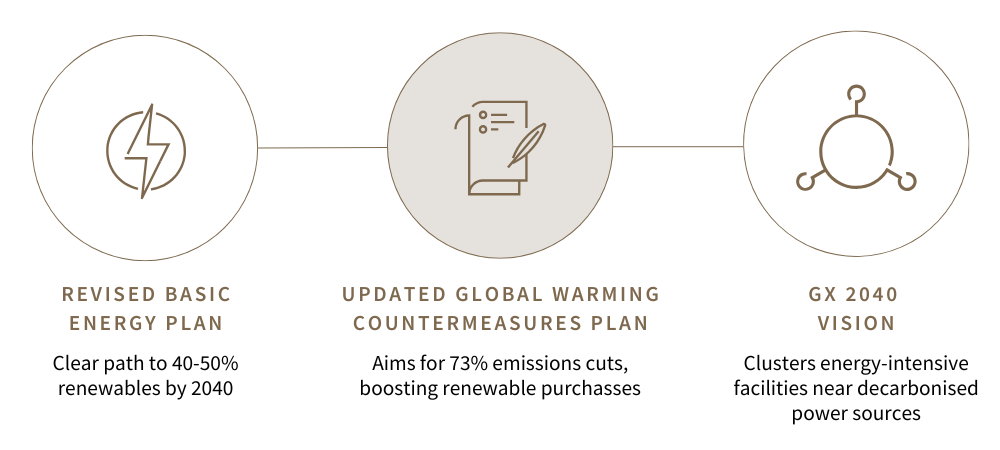
The government's plan to cluster energy-intensive facilities near decarbonized power sources, combined with phased carbon pricing beginning in fiscal 2026, fundamentally changes corporate energy economics. Together with the expected fossil fuel surcharge (2028), and power producer auction system (2033), they are expected to make renewable PPAs increasingly attractive over traditional electricity supply arrangements.
We anticipate accelerated corporate PPA activity across solar-plus-storage hybrids, offshore wind projects and integrated renewable-hydrogen solutions. This evolution will be particularly notable in the datacentre and semiconductor manufacturing sectors which explicitly targeted in the GX 2040 Vision. As in other countries transitioning to a disintermediated electricity market, early adopters will maximise their chance of securing both economic and sustainability advantages for the years to come.
- Japan is not alone in increasingly using Corporate PPAs to decarbonise – read about Vietnam’s efforts to grow renewables here: Unlocking green energy in Vietnam: How Corporate PPAs are a game changer
- For more on Japan’s broader efforts to achieve a net zero economy by 2050, read our Navigating Net Zero: APAC Climate Guide - Japan
Explore corporate PPAs in other jurisdictions:
Discover the trends shaping tomorrow's markets. Stay ahead in Asia.