In the dynamic landscape of the Australian energy sector, Letters of Intent (LOIs) are emerging as a key agreement to facilitate negotiations and signal commitment between parties.
The Rise of Letters of Intent in the Energy Sector - No Longer Just an ‘Agreement to Agree’
The Australian energy sector is undergoing significant transformation, driven by the global transition to renewable energy, ongoing regulatory changes, a constrained contractor market and increasing pressure on supply chains.
In this context, LOIs are gaining traction and in the process, expanding their scope. They have traditionally offered a preliminary framework for discussions and some commitment as to timing without the immediate pressure of formal long-term contracting, particularly at an early stage of project development.
In more recent times, we have witnessed a trend of LOIs locking in key terms and commercial principles and covering early design, procurement and other deliverables. LOIs are progressing from single-page, letter-headed documents drafted in convivial terms to increasingly complex documents more akin to Early Works Contracts or Early Contractor Involvement agreements..
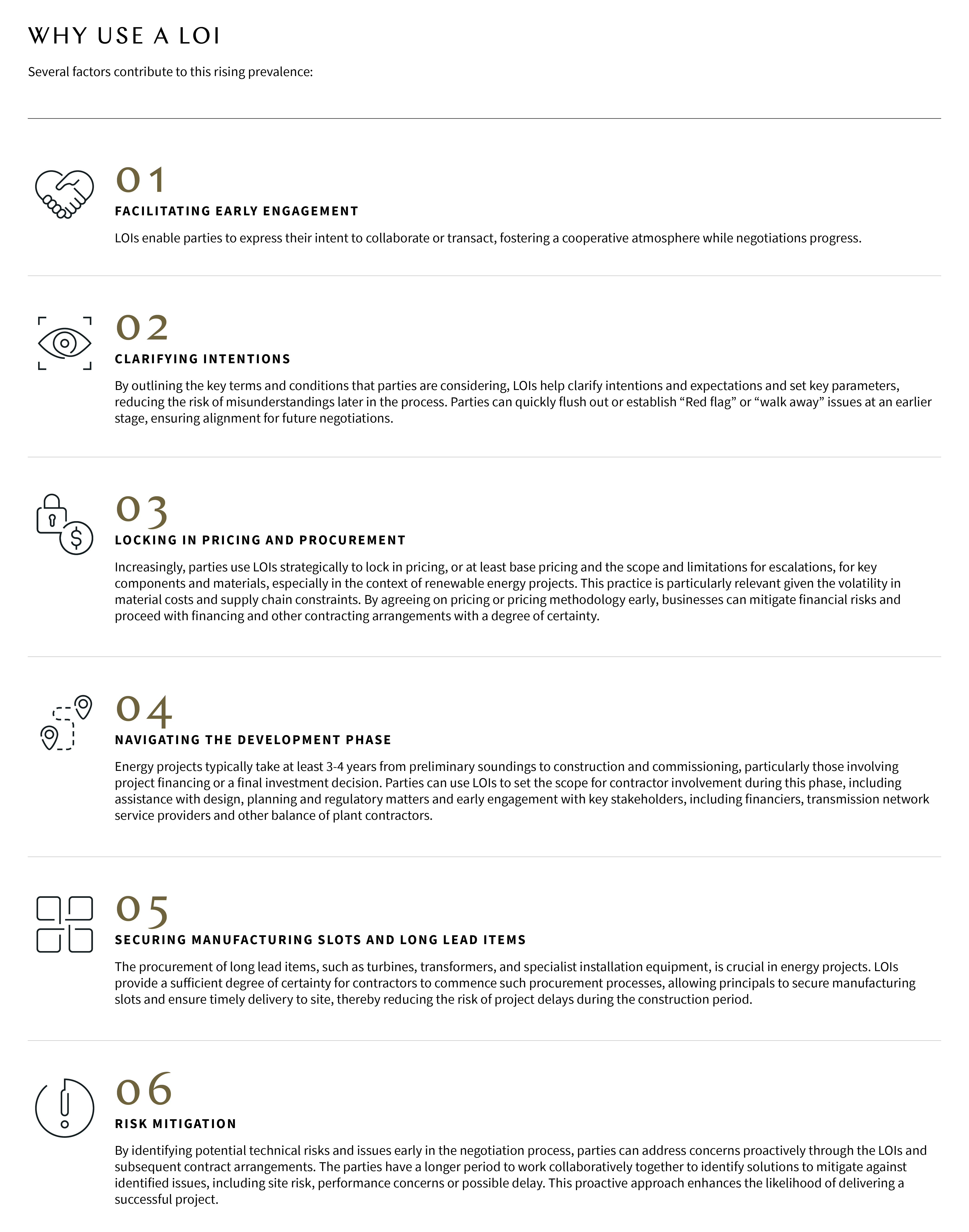
In this update, we explore reasons for using LOIs, their contractual standing, the associated risks and share drafting and negotiating tips.
We believe this emerging trend will deliver a number of overall benefits in energy transition, including:
- streamlining pricing and procurement across the sector
- maintaining focus and alignment during complex negotiations
- communication and drafting that leads to more successful energy project partnerships
Click to expand

The Binding Nature of Letters of Intent
Traditionally parties have regarded LOIs as non-binding ‘agreements to agree’. This means that, unless explicitly stated otherwise, the LOI does not intend to create enforceable obligations.
However, with more commercial and technical terms being agreed upon upfront, the market is moving towards binding LOIs. This has the advantage of allowing early investigation and design to be done, often in exchange for an early contribution to costs. However it also requires a sharper focus on the language used in LOIs and subsequent contracts.
‘Do we need to run this by Legal?’
With increasing commercial pressures - including constrained supply chains, lengthy planning and financing processes, complicated and ever-changing connection and commissioning requirements- there is a focus and intent on nailing down more ‘big ticket’ items early on. Very quickly, the handful of bullet point, high-level commercial terms arising from initial executive-level discussions can develop into a full shopping list of key considerations to be either locked in or at least put on the parties’ radar for now.
And when it comes to accurately and formally documenting this expanding list of commercial, technical and legal threads, it is probably time to consider getting the lawyers involved.
Key legal risks
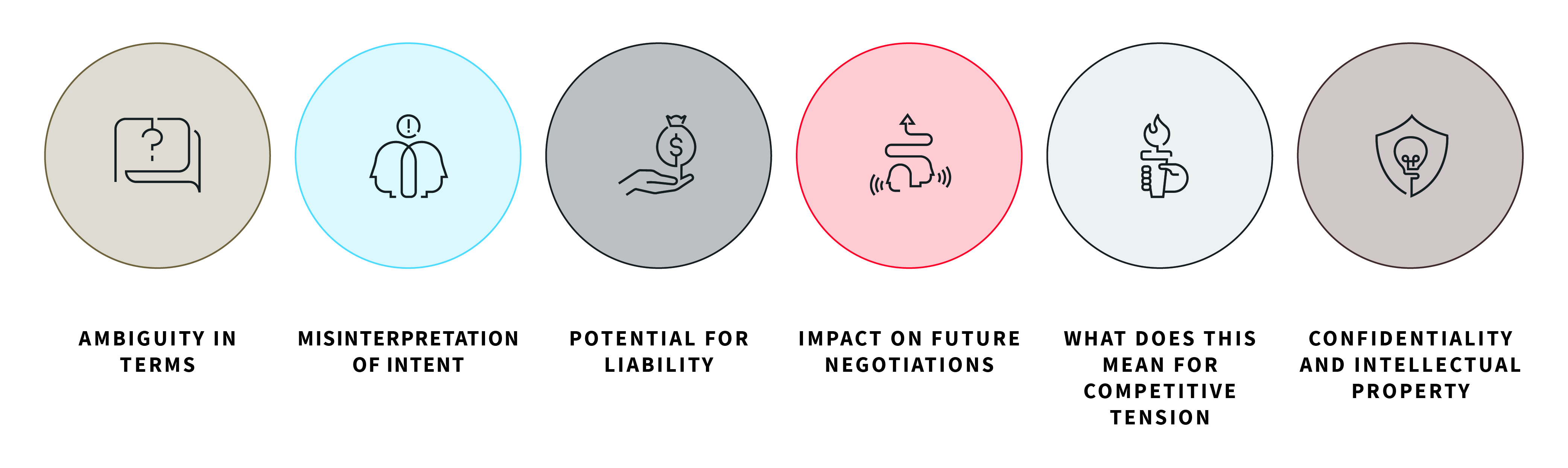
From a legal standpoint, several risks must be considered when drafting, negotiating, or executing an LOI and deciding if it is right for your project. These include:
- Ambiguity in Terms: Vague or poorly defined terms can lead to disputes regarding the parties' intentions. Ambiguity can result in differing interpretations, which may lead to costly delays in project timelines.
- Misinterpretation of Intent: Parties should ensure that the LOI accurately reflects their intentions and expectations to avoid misunderstandings about the commitments being made. On a similar note, it is important to manage expectations - an obligation or right which may be applicable at the time of the LOI may not be as relevant in the context of the works or services being provided under the full form contract, or may fall away as the project further develops during the LOI phase.
- Potential for Liability: If a party acts on an LOI that is later deemed binding, they may face unforeseen liabilities. It is essential to specify which provisions are intended to be binding or to survive the expiry or termination of the LOI to help avoid unintended legal obligations and financial exposure. Parties should also consider the exposure of each party under the LOI if the arrangements terminate or for services provided under the LOI.
- Impact on Future Negotiations: An LOI may inadvertently create a perception of commitment that affects subsequent negotiations. Parties should be cautious about the language used to avoid appearing overly committed before a formal agreement is in place. This can preserve negotiating leverage and flexibility.
- What does this mean for competitive tension: Consider what exclusivity (if any) will be offered and any impact this may have on negotiations or the ability to maintain competitive tension. For example:
- Long term LOIs or LOIs that are routinely extended can considerably undermine a Principal’s leverage when it comes to concluding the full contract if you’ve been heavily committed to, and in fact been paying, one tenderer under a LOI.
- With the strong pipeline of energy projects, there is a real demand on a relatively narrow contracting market. Projects with perceived incumbents (signed up under a LOI) are unlikely to get the full attention and buy-in of competitors if the market is reapproached.
- Any exclusivity should be limited to an agreed point of time.
- Confidentiality and Intellectual Property: LOIs often include confidentiality clauses to protect sensitive information. However, parties should also consider intellectual property rights and ensure that any shared information is adequately protected. This can prevent unauthorized use or disclosure of proprietary information or alternatively and set the parameters for the future use of design deliverables produced during the LOI phase (if any).
Drafting and Negotiating LOIs - Tips and tricks
To navigate the drafting and agreement of LOIs effectively, you may want to consider these best practices:
Avoid ambiguous language. Clearly outline the intent of the LOI and specify which parts are binding. For example:
- Does it afford an exclusive opportunity for the parties to negotiate the terms of a full blown contract?
- Does it allow the parties to undertake initial design or investigations?
- What is the duration of the LOI?
Keep detailed records of discussions leading up to the LOI to provide context and clarity in case of disputes. This documentation can serve as evidence of the parties' intentions and the evolution of the agreement.
Ensure that the LOI includes detailed terms regarding pricing, timelines, and obligations to provide a solid foundation for future negotiations. Taking the time now to step through terminology and using an extra line or two of context to ensure it accurately captures the agreed principle can save the need for further negotiations further down the line when misunderstood positions may be further entrenched or possibly irrevocable.
If any payment is to be made under the LOI detail when will that be made, what are the parameters for incurring expenses and what happens to items secured under the LOI in the event of termination. We would typically suggest a cap on expenditure that can be committed under a LOI.
Consider what terms from any likely contract should apply to the LOI. This will depend on what is being done under the LOI but if work is being done and funds being committed consider insurance levels in place or warranties required.
Whatever the scope, make sure the terms of the LOI are fit for purpose with appropriate exit ramps. LOIs should outline the conditions under which parties can terminate negotiations or exit the agreement and the consequences of the termination for materials secured or deliverables produced. Clear termination provisions can help manage expectations and reduce the risk of disputes if negotiations do not proceed as planned.
Consult with legal professionals experienced in the energy sector to review and advise on the LOI’s terms and implications. Legal experts can provide valuable insights into regulatory compliance and help draft provisions that protect your interests.
Conclusion
In the evolving Australian energy sector, Letters of Intent serve as a valuable tool for facilitating negotiations and clarifying commitments. Their increasing use for locking in pricing, securing manufacturing slots, and procuring long lead items underscores their importance in managing the complexities of the successful and timely delivery of utility scale energy projects.
Additionally, by establishing a framework for future discussions, LOIs help maintain focus and alignment throughout the negotiation process. However, their effectiveness hinges on careful drafting, clear communication, and a thorough understanding of their legal implications.
By navigating these complexities thoughtfully, contracting parties can leverage LOIs to foster successful partnerships that deliver upon the best of, but also earliest of, intentions.