The incumbent Australian Labor Party (ALP) has been re-elected to a second consecutive term in office. While all races are yet to be formally declared, the ALP is set to have more seats than at any point since its establishment, and will likely face a materially less fractured Senate, no longer having to rely on patching together support from a diverse group of independents in order to pass legislation.
The ALP’s re-election follows the most significant period of industrial relations change in decades, with the passage of the 2022 Secure Jobs, Better Pay and 2023/24 Closing Loopholes reforms to the Fair Work Act 2009 (FW Act). The landmark changes to several key areas, including rules increasing pay for labour hire workers, multi-employer bargaining, an intractable bargaining regime, enhanced delegates’ rights, changes to the definitions of casuals and ‘employee’, and criminal liability for ‘wage theft’, are now all in effect. When considered holistically, these amendments have fundamentally altered labour relations dynamics, providing significant leverage to employees and unions, and increasing risks associated with third party intervention by the Fair Work Commission.
In this Insight, we reflect on the practical outcomes arising from the ALP’s contentious legislation packages over its first term, and offer our predictions for further developments during Prime Minister Anthony Albanese’s next three-year term.
Click below chapter header to read more:
What is the current state of play?
Increase in enterprise bargaining and industrial action
Intractable bargaining declarations
Regulated labour hire arrangement orders
Multi-employer bargaining decisions
What’s next?
What is the current state of play?
In making the substantial changes during its first term, the Albanese Government largely overlooked concerns raised by business and employer bodies regarding the likely impacts of the legislation.
These changes are only now starting to work their way through the system, with business leaders voicing apprehension about unnecessary complexity, increased costs and a decline in flexibility and global competitiveness at a time when productivity and efficiency has never been more important.
Increase in enterprise bargaining and industrial action
One key impact that is being felt is in relation to the incidence of enterprise bargaining. Since the Government’s first tranche of reforms commenced on 6 June 2023, there have been almost 8,000 single-enterprise agreements approved by the Commission. Contributing to the increase in bargaining is the ability of employees and unions to issue a written ‘request’ to force the initiation of bargaining where an enterprise agreement is within five years of its nominal expiry, as well as employers acquiescing to bargaining requests in the face of a threatened or potential multi-employer bargaining application.
Recent data from the Department of Employment and Workplace Relations indicates there has been a sharp rise in the number of workers covered by enterprise bargaining agreements since 2021,[1] with Minister for Employment and Workplace Relations Murray Watt stating that “Since the Albanese Government changed our workplace laws, we’ve seen more agreements reached between employers, unions and workers than we have seen for years”.[2]
As noted in the Fair Work Commission General Manager’s recent report into developments in making enterprise agreements under the FW Act[3], during the period from 26 May 2021 to 25 May 2024:
Trends in Federal Enterprise Bargaining, December quarter 2024 | Australian Government, Department of Employment and Workplace Relations, https://www.dewr.gov.au/enterprise-agreements-data/resources/trends-federal-enterprise-bargaining-december-quarter-2024
Enterprise Bargaining Delivers More Wage Wins for Workers, December 2024 | Australian Government, Department of Employment and Workplace Relations https://ministers.dewr.gov.au/watt/enterprise-bargaining-delivers-more-wage-wins-workers.
General Manager’s report into developments in making enterprise agreements under the Fair Work Act 2009 for 2021 to 2024, https://www.fwc.gov.au/documents/reporting/gm-amr-2021-2024.pdf.
|
METRIC
|
REPORTING PERIOD
|
PREVIOUS-THREE YEAR PERIOD
|
|
Number of enterprise agreements approved |
12,920
|
12,305
|
|
Number of employees covered by an enterprise agreement |
2.65 million
|
1.94 million
|
|
Average annual wage increases (AAWIs) |
3.6%
|
2.7%
|
Given the rising number of enterprise agreements and the prevalence of union activity, the importance of direct engagement with employees cannot be overstated. This is especially so given the Commission now has expanded powers to impose arbitrated outcomes on parties through the intractable bargaining regime.
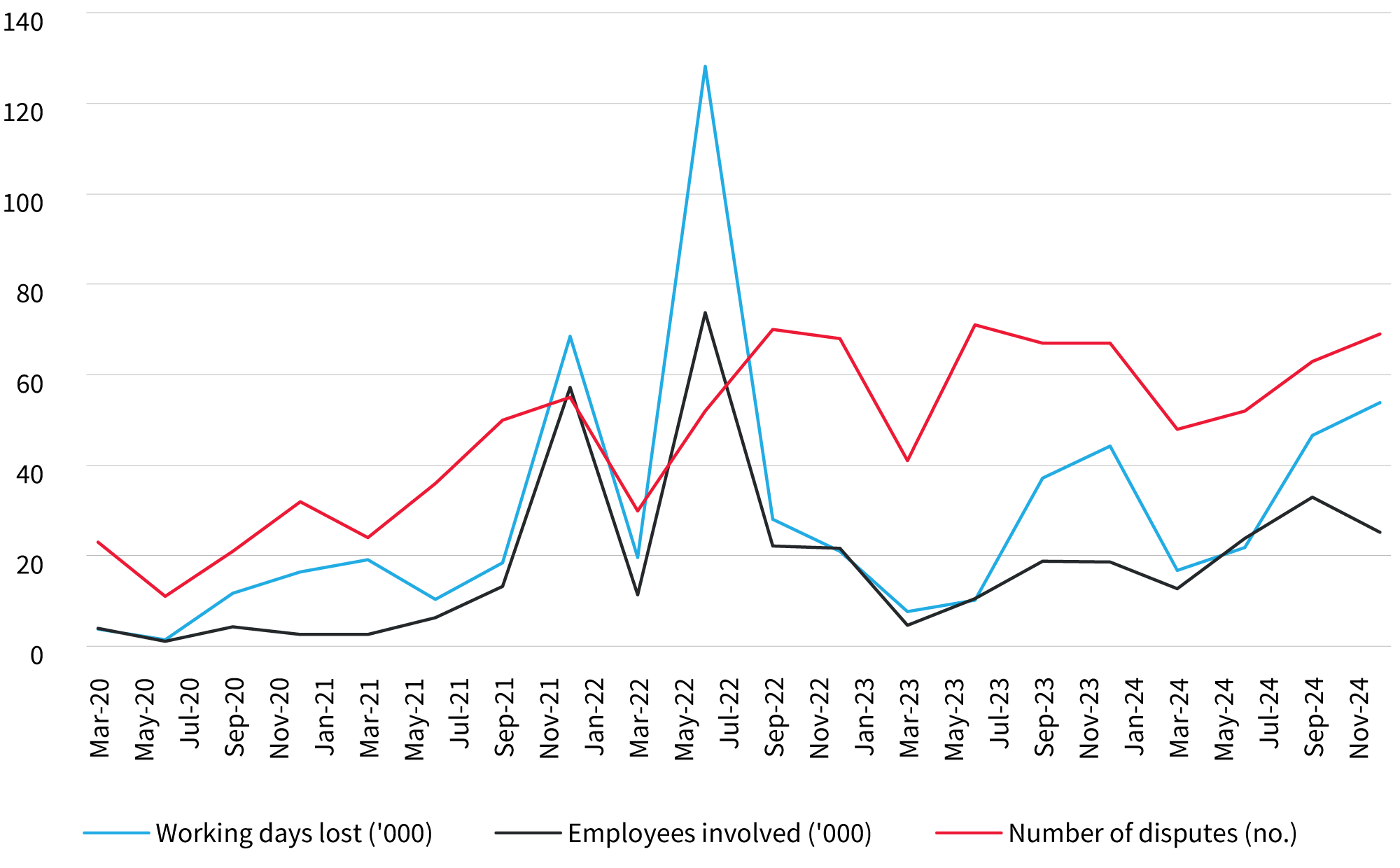
There have also been increased incidents of industrial action, with the number of disputes, working days lost and employees involved in industrial action all rising over the past 3 years, and significantly higher than the historical lows seen in mid-2020[4].
Industrial Action
Industrial Disputes, Australia, December 2024 | Australian Bureau of Statistics, https://www.abs.gov.au/statistics/labour/earnings-and-working-conditions/industrial-disputes-australia/latest-release.
Employers should be prepared to use the Commission both offensively and defensively, a point that is highlighted by the gains made by some employers in section 240 bargaining dispute conferences and the growing number of concerns raised by unions in relation to the recently introduced post-PABO compulsory conferences.
Intractable bargaining declarations (IBD)
As a refresher, the Albanese Government justified the Commission’s new powers to make IBDs and intractable bargaining workplace determinations by stating that these reforms would reduce the prospect of industrial action and create a strong incentive for parties to negotiate in good faith and reach agreements more quickly.
Whilst it is true that this reform lessened the risk of never-ending bargaining rounds, by giving parties a ‘release valve’, the introduction of a subsequent Greens-sponsored amendment which means that the terms of an intractable bargaining workplace determination cannot be less favourable for employees than any existing instrument (on a clause-by-clause basis) has removed much of the incentive for unions to reach agreement quickly, as there is little downside for employees if an IBD application is made. Further, as noted in the graph above, there has not been a reduction in industrial action since this regime was enacted- in fact, the opposite has been observed.
Since the relevant reforms commenced on 6 June 2023, there have been 14 applications to the Commission for an IBD, approximately half of which were made by unions and 9 of which were made following the Greens’ amendment referred to above. Eleven of the 14 applications resulted in a declaration being made, meaning that the Commission was empowered to arbitrate disputed terms by making an intractable bargaining workplace determination following any post-declaration negotiating period. Notably, only one declaration has been made over the opposition of a party. Although the FW Act sets a minimum bargaining period of 9 months before a declaration can be made, in the 14 successful IBD applications, bargaining had on average been on foot for 2 years and 1 month and normally at least one or two unsuccessful employee votes had already been held. The average post-declaration negotiating period for the 11 successful IBD applications was approximately 13 days.
|
IBDs in Numbers
|
INDIVIDUAL
|
Example
uses 2
|
|
|
IBD applications granted
|
11 (of 14)
|
|
|
|
Average bargaining period prior to IBD being made
|
2 years 1 month
|
|
|
|
Average post-declaration negotiating period
|
~13 days
|
|
|
Given that any ‘agreed’ terms must be included in a workplace determination, with the Commission arbitrating the remaining terms, a key issue is what terms are in fact ‘agreed’? Whilst the Full Federal Court has accepted that an emergency services employer’s repeated statements its proposal was conditional and subject to Government approval meant that there were no ‘agreed’ terms[5], it is less clear what view will be taken in respect of private-sector employers arguing that their proposals are made on a ‘package’ basis. The early indications are that employers will need to be able to point to more than just a mere recitation of the ‘package’ concept, for example, by clearly setting out in bargaining the budget parameters and sticking to this framing throughout. The statement that “nothing is agreed until everything is agreed” is only likely to be as good as the evidence demonstrating the genuineness and consistency of that position.
There have only been 3 workplace determinations issued by the Commission to date:
- TWU v Cleanaway Operations [2024] FWCFB 287: The key terms in dispute were ordinary hours of work, penalty rates, and wage rates. The Commission determined that employees were entitled to a 23% wage increase over four years, which was well above Cleanaway’s proposed 11% over 3 years, and only marginally lower than the TWU’s proposed 24% over 4 years;
- TWU v Cleanaway Operations [2024] FWCFB 305: The Full Bench of the Commission made determinations in respect of hours of work, the dispute resolution procedure, wage increases, redundancy, employee classifications and the agreement’s nominal expiry date. Observing that Cleanaway was pursuing changes to existing terms and conditions that would have been less favourable, the Bench landed on a 17.5% wage increase over 5 years in circumstances where the TWU was pushing for 19.5%, and Cleanaway was pushing for 12 – 14% over 3 years. The Bench sided with the TWU in respect of ordinary hours of work but otherwise sided with Cleanaway in respect of redundancy entitlements, employee classifications and the agreement’s nominal expiry date. The Bench also determined that it did not have the power to impose a compulsory arbitration clause on a party without their consent;
- Transgrid v Joint Unions [2025] FWCFB 73: The Full Bench made determinations in respect of wage increases, superannuation contributions, overtime provisions and the nominal expiry date. Within its 61-page decision, the Bench dismissed Transgrid’s claim that it did not have the power to order retrospective pay increases. After hearing the Joint Unions’ arguments for a 20.5% wage increase over 3 years, and Transgrid’s arguments for a 14% wage increase, the Bench settled on 16.5% over three years, plus two 0.5% superannuation increases (favouring the Joint Unions’ position).
While IBDs are not yet commonplace, they are likely to continue to rise and are a risk in any protract bargaining process, and a carefully considered bargaining strategy is essential. Communication plans with employees and unions and a documentary trail of the clear and consistent rationale for the positions being taken in bargaining (by reference to business needs, including productivity) will become more important than ever.
Regulated labour hire arrangement orders (RLHA Orders)
Despite significant campaigning by industry stakeholders against the ‘Same Job, Same Pay’ regime, Parliament passed legislation in December 2023 empowering the Commission to make RLHA Orders.
An RLHA Order requires employees of third-party providers of labour to be paid no less than the rates of pay under an enterprise agreement that would apply to the employees if they were employed directly by the host organisation (even if the host does not employ its own employees to do the same work). These reforms had the stated aim of stamping out the illegitimate use of labour-hire in the resources and aviation industries, but are in fact not confined to those industries or even just to labour-hire workers (as that term is commonly understood).
Although there is a ‘service contractor’ exception to RLHA Orders, unions are arguing for a narrow interpretation of this exception, which is currently the subject of a test case before a Full Bench of the Commission.
We have seen a continued stream of RLHA Orders being made by the Commission. These orders are being made at rapid pace and, notwithstanding that most of the applications have been consented to by employers and regulated hosts – or at least not vociferously opposed – the Commission has made orders in relation to every application which it has determined to date. This indicates that the jurisdictional prerequisites under the legislation may not be operating as significant barriers in relation to circumstances which parliament did not expressly intend to be captured by the new regime.
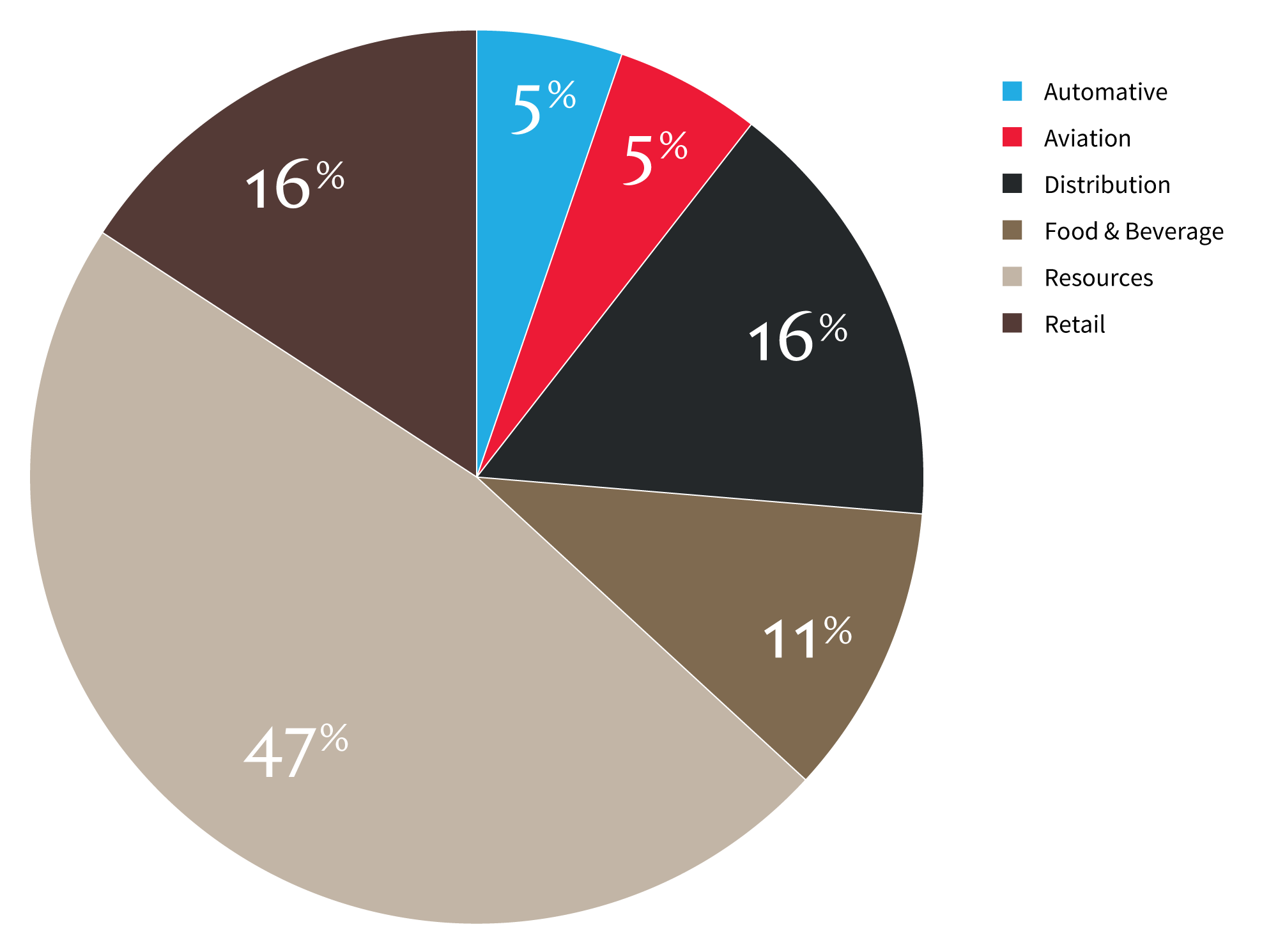
The Mining Energy Union (MEU) has brought the highest number of applications (12), followed by the Shop Distributive & Allied Employees Association (SDA) (4). The resources industry has also seen two applications brought by an individual employee[6], and one application brought by 17 individual employees[7]. Interestingly, most of the applications have been heard by Justice Hatcher, either as a single Member or as part of a Full Bench. The table below sets out the grounds of opposition in the two applications that have been opposed, both of which were brought by the MEU.
See Application by Jonathan Payne [2024] FWC 3557 and Application by Mr Nicholas Driver [2024] FWCFB 394.
See Application by Kelsey Aretha Cherrington re Olympic Dam Mine [2025] FWC 1158.
|
PARTIES
|
GROUNDS OF OPPOSITION
|
Example
uses 2
|
|
Applicant: MEU Opposing parties: Skilled Workforce Solutions (NSW) Pty Ltd and WorkPac Mining Pty ltd |
Skilled opposed the orders on 3 grounds (with WorkPac adopting ground 2 for its opposition): Ground 1: The orders sought would, if made, result in the acquisition of Skilled’s property otherwise than on just terms. Ground 2: The orders sought are not fair and reasonable in all the circumstances. The FW Act provides a process whereby any perceived wage injustice between labour hire provider and host can be bargained over, in exchange for productivity improvements. Unfairness on this score is already moderated and accounted for by the enterprise bargaining mechanisms contained in Part 2-4 of the FW Act. Ground 3: The proposed order is too broad and does not meet the obligation to “specify” in the FW Act. The proposed order needs to be delimited in two respects: should be limited to haul truck and water cart driver because evidence does not establish that Skilled supplies any other types of employees; and should not apply prospectively to any services (as opposed to labour) Skilled might supply in the future. |
|
|
Applicant: MEU Opposing parties: CoreStaff NSW Pty Ltd, Skilled and Bengalla Mining Company Pty ltd |
The proposed host and employers opposed the order on similar grounds: Ground 1: Skilled contended that an RLHA Order would give rise to an acquisition of its property otherwise than on just terms for the purposes of section 51(xxxi) of the Constitution and the Commission, as a result, has no jurisdiction to make the order sought. Bengalla and CoreStaff did not join in making that submission. Ground 2: Bengalla, CoreStaff and Skilled each contended, albeit for somewhat different reasons, that the Commission is prohibited from making a RLHA Order in either case because it should be satisfied that it is not fair and reasonable in all the circumstances to do so. Ground 3: Skilled contends that the form of order sought by the MEU is deficient and not sufficiently specific and that, if an order is made, it should exclude certain groups of workers, including employees who perform work involving “car washing”, trainees performing work as part of a training arrangement and future employees if they perform work for the provision of a service, rather than the supply of labour. |
|
While employers have attempted to confine the scope of RLHA Orders to work that is currently being performed by on-hire employees, rather than to work that could be performed in the future, this has been rejected by the Commission[8]. The resultant complexity for host employers is that it is increasingly difficult to comply with the post-RLHA Order obligations, including:
- information sharing obligations where there are no employees of the host currently performing the relevant work, or where the contractor’s employees’ pattern of work is not contemplated by the hosts agreement, meaning it is difficult to provide sufficient information about rates of pay and how they are to be calculated;
- the obligation for a regulated host to apply to the Commission to vary a RLHA Order as soon as the host employer becomes aware that a new employer has commenced, or is to commence, supplying employees to perform work for the regulated host that is the same kind of work performed by regulated employees covered by the RHLHA Order; and
- the obligation to notify tenderers of an RLHA Order.
Employers have also raised concerns that it is difficult to calculate the ‘protected rate of pay’ in circumstances where labour hire employees’ roster patterns are not contemplated by the host’s enterprise agreement[9], although these arguments have been largely dismissed by the Commission.
Another interesting trend in this area relates to the industries in which the orders are being sought. While most of the RLHA Orders made by the Commission to date have applied to the energy and resources sector, the most recent RLHA orders cover a wider cross-section of industries (specifically aviation, warehousing, and pharmacy).
RLHA Orders by industry
See, for example, the Commission’s recent refusal to confine RHLA Orders at BHP’s Mt Arthur Coal site to haul truck drivers in [2025] FWC 866).
See, for example, the Commission’s rejection of a labour hire company’s bid to limit RLHA Orders to on-hire workers performing weekday rosters permitted under the host’s enterprise agreement, and to exclude those on weekend rosters – [2025] FWCFB 12).
Multi-employer bargaining decisions
The impact of multi-employer bargaining reforms is starting to play out across a number of industries, with unions seeking to leverage recent reforms to increase their profile and membership, and access bargaining in businesses in which they have not previously been as active.
The reforms expanded the capacity for employer, employees and employee bargaining representative to bargain for three different streams of agreements:
|
Supported bargaining
|
Involves bargaining across multiple employers in low paid industries (such as aged care, disability care, and early childhood education) and those who are said to face barriers to bargaining – We are now seeing unions using this stream to make applications against fast-food industry franchisees. |
|
|
|
Single interest bargaining
|
Involves multiple employers who have a common interest (or are part of the same franchise system) who employ at least 20 employees each and aim to make a multi-enterprise agreement known as a ‘single interest employer agreement’ – We have seen unions using this stream to bring applications against:
|
|
|
|
Cooperative workplace bargaining
|
Involves multiple employers (who are not involved in supported bargaining or single interest bargaining) and are not necessarily related but who agree to bargain cooperatively, with their employees, some of which must be represented by a registered employee organisation. The outcome of this stream is a ‘cooperative workplace agreement’ – So far, we have seen only one cooperative workplace agreement in the finance sector and one variation to an existing agreement in the religious education sector. |
|
|
Since the multi-employer reforms commenced on 6 June 2023, we have seen 45 agreements approved across the three bargaining streams. The most prominent industry to feature these agreements is Educational services (18), followed by Health and welfare services (6) and Building, metal and civil construction industry (3). Other industries that have been subject to one or two applications include the Agricultural industry, Social, community home care and disability services, Banking, finance and insurance industry, Children’s services, Clerical industry, Coal export terminals and Market and business consultancy services.
In December 2024, the Commission approved the landmark early childhood education supported bargaining agreement, initially covering 64 employers and more than 12,000 workers[1]. Since then, the Commission has approved variations to add further employers, with the total reaching 289 employers and approximately 40,000 employees[11]. While significant, this is not necessarily reflective of the broader implications of these multi-employer bargaining streams, given the large volume of applications can be at least partly explained by the fact that access to the Early Childhood Education and Care Worker Retention Payment established by the Government in 2024 to fund the 15% work value pay increases requires employers to have an eligible workplace instrument.
Once multi-employer enterprise agreements are made with an initial group of employers, we expect unions to progressively utilise the mechanisms for adding (‘roping-in’) further employers and employees as they seek to increase their footprint across the relevant sector – although we have not seen any such applications made to date. We also expect that unions will use favourable outcomes in bargaining and the Commission as their blueprint for pursuing similar multi-employer enterprise agreements against others in the same field (e.g. against other fast-food franchise businesses).
What’s next?
Interestingly, industrial relations and employment issues did not feature prominently in the policy platform for either of the major political parties during the election. The unions were also uncharacteristically quiet during the election campaign (absent the lobbying for a wage theft tribunal, protection of penalty rates and the removal of employer’s ability to lawfully lock out employees), although we now expect to see a push on the next tranche of activity in the wake of the ALP’s landslide win.
While Minister Watt originally indicated that there are no substantial industrial relations or employment reforms on the horizon, he later stated that after laying the “foundations” and getting “real wages rising, employment growing and inflation falling” in its first term, a re-elected ALP would continue its work “to build Australia’s future”.
Treasurer Jim Chalmers, a member of the Australian Workers’ Union, also announced that a re-elected Albanese Government would ban non-compete clauses for workers earning below the Fair Work Act’s $175,000 high-income threshold (excluding superannuation and indexed annually), commencing from 2027 and “operating prospectively to give businesses and workers time to adjust”. In a joint statement with Minister Watt and competition minister Andrew Leigh, Chalmers said that the ALP would also consider extending restrictions on non-competes to high-income workers and to curbing non-solicitation clauses for clients and co-workers.
Minister Watt commissioned an independent review into the impact of the Secure Jobs, Better Pay reforms that will consider whether any further amendments are required to improve their operation[12]. The Review’s Draft Report released in January 2025 identified key areas for improvement, including around the fixed term contract limitations and gender equity measures. The final report was due by 31 March 2025 and was reportedly delivered to Minister Watt just before the ALP Government entered its caretaker period.
Late in the election campaign the ALP announced that it would legislate to “protect penalty rates in awards”, which was in response to a number of applications by employer groups to introduce ‘exemption rates’ (which have the effect of buying out penalty rates and other entitlements in return for a higher annual salary) into modern awards.
Although not yet formal policies, we expect the ALP to come under pressure from unions and the Greens to make further reforms in a number of areas including:
ACTU submission, recommendation 22, page 8.
|
A national universal ‘portable’ leave scheme
|
The ALP is expected to revive a commitment to a universal portable long service leave entitlements or a broader national portable leave scheme. This follows the Victorian Supreme Court handing down landmark rulings that expanded portable entitlements in Victoria beyond the building industry, echoing similar rulings in Western Australia that expanded the state’s portable long service leave for the ‘construction industry’ to apply to maintenance work performed on established operating sites in the resources industry. |
|
|
|
National labour-hire registration scheme
|
During its first term, the ALP committed to establishing national labour-hire regulation in response to a key recommendation of the Migrant Workers’ Taskforce. Victoria has been endorsed as the host jurisdiction responsible for the passage of the model law and there have been recent calls for the Albanese Government to establish the scheme by the end of 2025 |
|
|
|
Banning or restricting the use of ‘lock-outs’
|
The Australian Council of Trade Unions has pressured the Albanese Government to amend the Fair Work Act to ban or restrict employers from locking out workers. The ALP is yet to accept or reject the ACTUs call. |
|
|
|
Reproductive leave
|
While the Greens are pushing for 12 days of paid reproductive leave, the ACTU is also pressing for universal access to 10 days’ paid reproductive leave per year. |
|
|
|
Increasing paid parental leave
|
The amount of parental leave pay available to families under the Government’s Paid Parental Leave Scheme is already scheduled to increase to 120 days (24 weeks) for children born or adopted from 1 July 2025. In light of the Greens’ election plan to double paid parental leave, we expect the ALP to face pressures for another increase in its second term. |
|
|
|
Restrictions on use of artificial intelligence (AI)
|
The ALP has said that it is “focused on legislative options” for mandatory AI guardrails but is yet to propose any formal changes to the Fair Work Act or commit to a separate Australian AI legislation, but unions will push to restrict the impact of AI and automation on the workplace. We have already started to see issues around the use of AI being raised during bargaining, with unions seeking protections in relation to employee job security. |
|
|
It remains to be seen how the Government will manage balancing these claims against its stated objective that the “second term will be primarily [about] productivity without forgetting inflation”[13].
Outside of the legislative agenda, we also expect reform to continue through the expanded powers of the Commission, with a number of major cases to be dealt with in 2025, including:
- An application by the SDA to remove ‘junior rates’ in the retail, fast-food and pharmacy awards (which could then spread to other awards);
- The Commission’s self-initiated major-case on part-time employment provisions, which is expected to develop model part-time clauses for use across all awards;
- A further review of the FW Act's model consultation clause, with unions pushing the Commission to impose an obligation on employers to consult prior to a ‘definite decision’ being made, as well as expanding the areas of consultation to cover the use of artificial intelligence and automation; and
- The ‘regulated worker’ and ‘road transport’ minimum standards order and contractual chain order regime, which is likely to have a significant impact across a number of sectors.
Employers should also expect that regulators will continue to be extremely active. The Fair Work Ombudsman will continue its focus on compliance, with it having recently issued underpayment remediation guidance[14] and with the ‘wage theft’ legislation yet to be tested. The Australian Human Rights Commission will also continue its focus on ensuring employers are complying with the ‘positive duty’ to prevent sexual harassment, sex-based discrimination and other gender-based harms, while each of the state-based WHS regulators are set to increase their attention on psychosocial risks and hazards.
So, considering the realm of matters we have discussed, we can reasonably expect to see the impact of the sweeping and significant changes of the past three years keep flowing through the system, whilst accompanied by further reforms in targeted areas.
Treasurer Jim Chalmers during an interview with ABC’s Insiders, Sunday 4 May 2025.
Payroll remediation program guide – Fair Work Ombudsman - https://www.fairwork.gov.au/sites/default/files/2025-04/Payroll%20remediation%20program%20guide.pdf